
Winter 2010 was my first on the water and it was certainly memorable. Iced in from November through to January, it proved to be an experience that might have had me and my family putting a For Sale sign up less than a year after buying and yet, somehow it instead helped us connect with everything we now love about narrowboating…

passed lock | alice elgie
That winter, with ice cracking around our ears as we slept, we found beauty in simplicity, strength in embracing limited resources, and thrived coming up with ingenious ways to get through, such as ferrying rubbish and waste on our young daughter’s sled down to the nearest towpath facilities station, or working together with neighbours to join up hosepipes so we could each connect to the nearest unfrozen tap. Community is something that always stands out whenever I talk to fellow boaters about life on the water and I can attest that there’s nothing like a harsh winter to bring out the best in people.
Nowadays though I’d like to think I’m a more seasoned winter boater, knowing how to get prepared well in advance for these colder days, how to keep the fire burning through the night, and also how to ensure my boat is safe, especially if it’s being left alone for a cold spell. For a start, you’ll find me stocked up with wood and smokeless coal before there’s even so much as a nip in the air so that when it’s time to bring the coal bucket out of summer storage from the front well-deck, I’m ready to go. Kindling and logs might also be gathered throughout the year and stored on the roof, but be aware that they will need to have dried for approximately one year before you burn them. Wet wood in a small boat does not create the kind of toasty, cosy atmosphere I like to go for in this season!
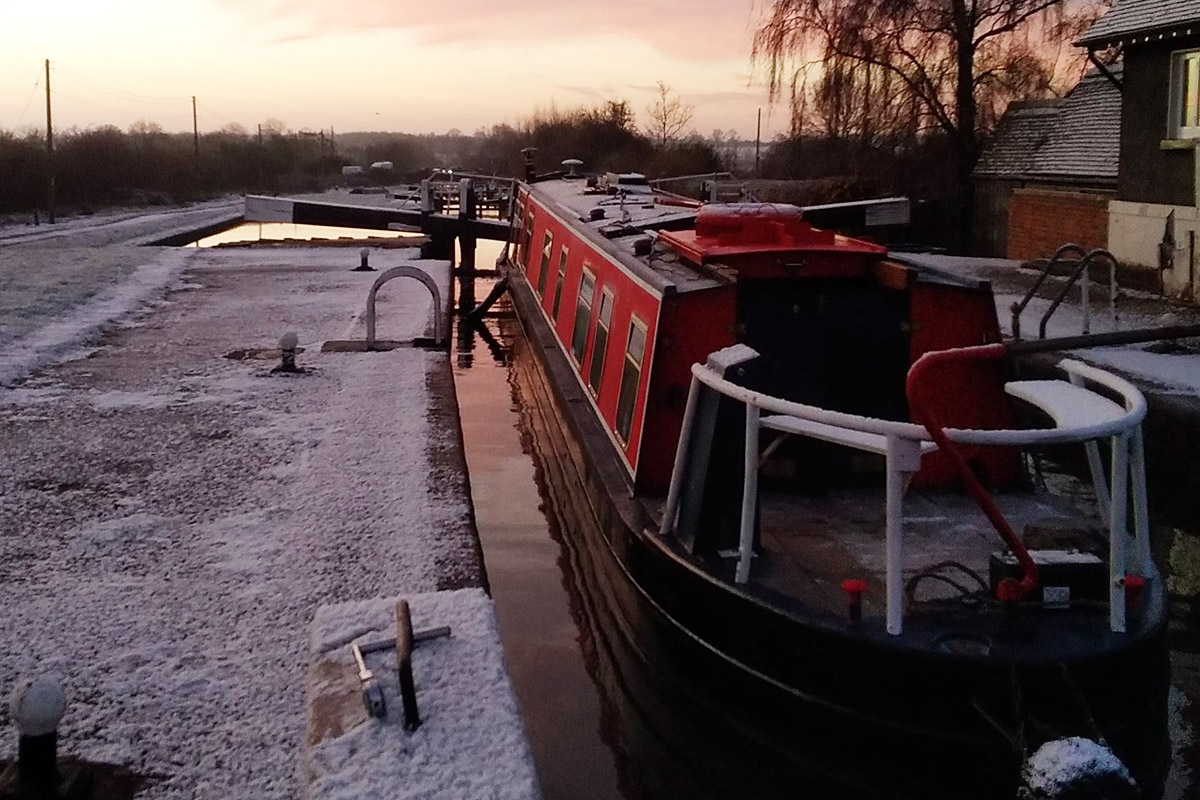
passing lock in winter | alice elgie
Curious about how warm it is on a narrowboat? https://www.foxboats.co.uk/narrowboats-is-it-cold-in-winter/
It’s also important to remember that the canal freezes so if you’re a continuous cruiser you’ll want to make sure you’re where you’re happy to be for a time—ideally close to a water point and facilities but also with the realisation that water points freeze too so start as you mean to go on with water conservation! I like to channel our industrial past and those bargees who worked historic boats through all conditions, often crammed into a boatman’s cabin with their entire family. You might not agree, but I think there is a romance to sink washes and basic meals cooked on the fire…and if you’re lucky enough to work from your boaty home it can feel like permission to switch off, hunker down and forget about the world ‘out there’.
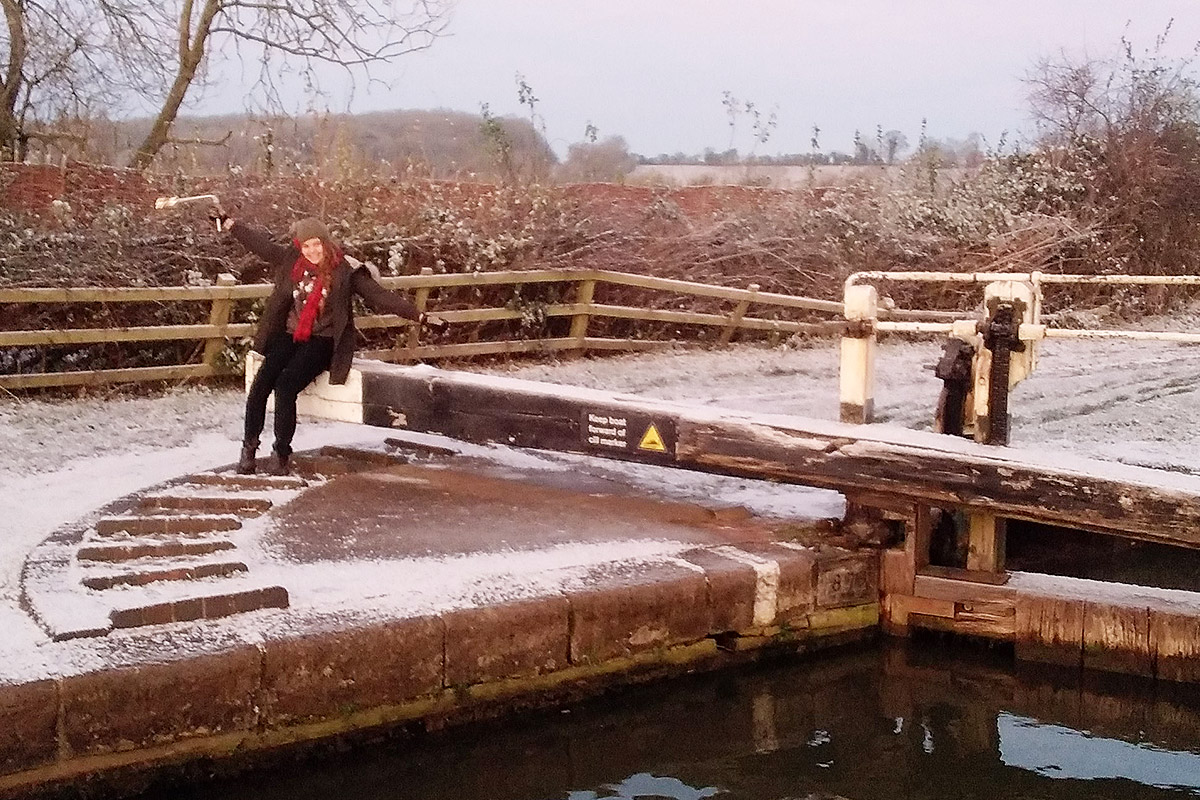
Mood-boosting tips to beat the winter blues! https://www.foxboats.co.uk/three-foxy-mood-boosting-tips-for-this-winter/
On a practical level, make sure you’ve topped up your engine and heating system with antifreeze otherwise you might end up with a cylinder head cracking or a radiator pipe splitting. Also ensure you’ve paid some attention to any gaps in hatches, portholes and doorframes, and if you’re planning to leave your boat for a time but aren’t confident to winterise it yourself, you could ask a marina to carry out the draining of your water system and radiators and turning off of water pumps to avoid burst pipes and seals.
Whilst my 15 years on the water haven’t been without the odd hiccup, once settled into the rhythm and quirks of boat life you’ll find that winter—whilst sometimes a challenge—can be the thing that sets your life at the helm in stone…although I for one am hoping this winter won’t be quite as bracing as 2010!
Photo credits: Alice Elgie
Alice Elgie is a nature-loving writer who shares words about her wandering lifestyle through hold-in-the-hand letters and recorded reflections. aliceelgie.com


